
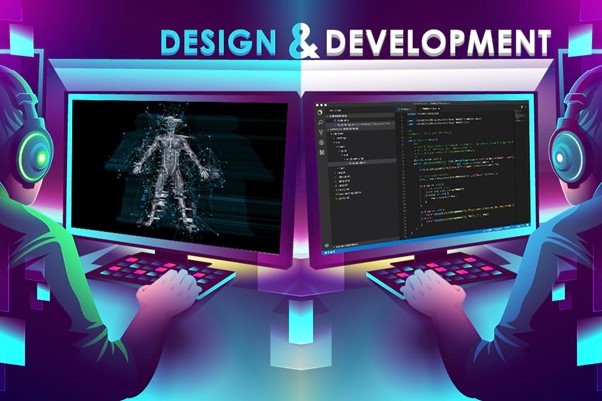
Many beginners entering the gaming industry often confuse game development with game design. While both roles are closely connected and equally important, they involve very different responsibilities, skill sets, and career paths. Understanding the difference between game development and design is crucial if you want to choose the right direction for your career in 2026.
This article provides a clear, professional breakdown of game development vs game design, covering roles, tools, skills, workflows, and career opportunities.
Table of Contents
What Is Game Development?
Game development focuses on the technical implementation of a game. Game developers are responsible for turning ideas, designs, and mechanics into a functional, playable product.
Game developers work mainly with:
- Programming languages
- Game engines
- Performance optimization
- Debugging and testing
- Platform-specific deployment
In simple terms, game developers build the game.
Core Responsibilities of a Game Developer
- Writing gameplay logic and systems
- Implementing physics, animations, and AI
- Integrating assets such as models, sounds, and UI
- Optimizing performance for different devices
- Fixing bugs and crashes
- Deploying games to platforms like PC, console, or mobile
Game developers usually specialize in areas such as:
- Gameplay programming
- Engine programming
- AI programming
- Network and multiplayer systems
What Is Game Design?
Game design focuses on how a game plays and feels. Game designers shape the player experience by defining mechanics, rules, progression systems, and overall vision.
They answer questions like:
- Is the game fun?
- Are the mechanics balanced?
- Is the difficulty fair?
- Does the player stay engaged?
In short, they design the experience.
Core Responsibilities
- Defining gameplay mechanics and rules
- Designing levels and progression systems
- Writing game design documents (GDDs)
- Balancing difficulty and rewards
- Designing player interactions and feedback
- Collaborating with developers and artists
They often specialize in:
- Level design
- Systems design
- Narrative design
- UX and player experience design
Key Differences Between Game Development and Design
1. Focus Area
- Game Development: Technical implementation and coding
- Game Design: Gameplay ideas, mechanics, and player experience
2. Required Skills
Game Developer Skills
- Programming (C++, C#, GDScript)
- Problem-solving and logic
- Mathematics and physics
- Debugging and optimization
- Version control (Git)
Game Designer Skills
- Creativity and storytelling
- Game mechanics and balance
- Player psychology
- Communication and documentation
- Prototyping and iteration
3. Tools and Software
Game Development Tools
- Unity
- Unreal Engine
- Godot
- Visual Studio, Rider, GitHub
Game Design Tools
- Game Design Documents (GDDs)
- Figma for UI/UX
- Miro and Notion for planning
- Excel or Google Sheets for balancing
4. Daily Work Activities
A Game Developer’s Day Might Include:
- Writing or refactoring code
- Fixing bugs
- Improving performance
- Testing builds
- Reviewing pull requests
A Game Designer’s Day Might Include:
- Designing or refining mechanics
- Playtesting and analyzing feedback
- Adjusting difficulty curves
- Writing documentation
- Collaborating with developers and artists
Career Paths and Job Opportunities (2026)
Game Development Careers
- Gameplay Programmer
- Engine Programmer
- AI Programmer
- Mobile Game Developer
- Multiplayer Systems Engineer
Game developers are in high demand, especially with the growth of cross-platform and live-service games.
Game Design Careers
- Game Designer
- Level Designer
- Narrative Designer
- UX Designer for games
- Systems Designer
They are essential for retention-focused games such as RPGs, strategy games, and live-service titles.
Salary and Market Demand Comparison
In 2026:
- Game Developers generally earn higher salaries due to technical expertise.
- Game Designers compete more heavily for roles and rely strongly on strong portfolios.
However, both roles offer long-term growth, especially for professionals who understand both design and development fundamentals.
Can One Person Be Both?
Yes. Many indie game developers act as both game developer and game designer. In smaller teams, hybrid roles are common.
Benefits of learning both:
- Better communication between teams
- Faster prototyping
- Stronger creative control
- Higher value in indie and startup environments
Learning both roles is highly recommended for beginners in 2026.
Which One Should You Choose?
Choose Game Development if:
- You enjoy coding and logic
- You like solving technical problems
- You want strong technical career stability
Choose Game Design if:
- You enjoy creativity and storytelling
- You care deeply about player experience
- You like planning and iteration
Many professionals start in one role and gradually expand into the other.
Final Thoughts
Game development and game design are two pillars of the gaming industry. One focuses on building the game, the other on shaping the experience. In 2026, successful professionals understand the value of both roles, even if they specialize in one.
If you are serious about a career in games, learning the fundamentals of both game development and game design will significantly increase your chances of success.
Also Check Best Game Engines in 2026 – Unity vs Unreal Engine vs Godot
1 thought on “Game Development vs Game Design – Best Comparision 2026”