Quantum computing is no longer just a theoretical concept. As we move through 2026, quantum computers are becoming increasingly powerful, offering capabilities that classical computers cannot match. From cryptography to drug discovery and climate modeling, it promises to revolutionize industries and solve complex problems at unprecedented speeds.
This article explains quantum computing basics, real-world applications, and its potential impact on technology and society.
Table of Contents
What Is Quantum Computing?
Quantum computing leverages principles of quantum mechanics to perform computations that are impossible for classical computers. Unlike classical bits, which can be either 0 or 1, quantum bits (qubits) can exist in superposition, representing both 0 and 1 simultaneously. Additionally, qubits can be entangled, meaning the state of one qubit directly affects another, enabling highly complex calculations.
How Quantum Computers Differ From Classical Computers
| Feature | Classical Computers | Quantum Computers |
|---|---|---|
| Basic Unit of Data | Bit (0 or 1) | Qubit (0, 1, or superposition) |
| Computation | Sequential/Parallel | Quantum parallelism |
| Problem Suitability | Routine tasks, general computing | Complex optimization, cryptography, simulation |
| Speed Potential | Limited by clock speed | Exponentially faster for specific problems |
Quantum computers excel in solving highly complex and computationally intensive problems, such as factoring large numbers, optimizing logistics, and simulating molecular interactions.
Real-World Applications of Quantum Computing in 2026
1. Cryptography and Cybersecurity
Quantum computers can break many traditional encryption algorithms, including RSA and ECC, threatening current cybersecurity protocols. Conversely, they enable the development of quantum-resistant encryption.
Use cases:
- Secure communication using quantum key distribution (QKD)
- Advanced cryptanalysis for testing security systems
2. Drug Discovery and Healthcare
It allows precise simulation of molecular interactions, reducing the time required for drug development.
Applications:
- Simulating protein folding
- Predicting chemical reactions
- Accelerating discovery of vaccines and therapeutics
This capability can significantly reduce the cost and time of developing new treatments.
3. Climate Modeling and Environmental Science
It can simulate complex environmental systems, helping predict climate patterns and natural disasters.
Use cases:
- Optimizing renewable energy distribution
- Modeling weather and climate change scenarios
- Simulating ecological impacts for conservation
These capabilities allow governments and organizations to plan more effectively for a sustainable future.
4. Finance and Optimization
Financial institutions use quantum computing for complex optimization problems, risk analysis, and algorithmic trading.
Applications:
- Portfolio optimization
- Fraud detection
- Real-time risk modeling
It can process large datasets and generate predictive insights faster than classical systems.
5. Artificial Intelligence and Machine Learning
Quantum computing enhances AI by improving optimization, pattern recognition, and processing large datasets.
Examples:
- Faster training of deep neural networks
- Enhanced feature selection and data analysis
- Real-time adaptive AI systems
Quantum-enhanced AI has the potential to solve problems that were previously computationally infeasible.
Challenges Facing Quantum Computing
1. Hardware Limitations
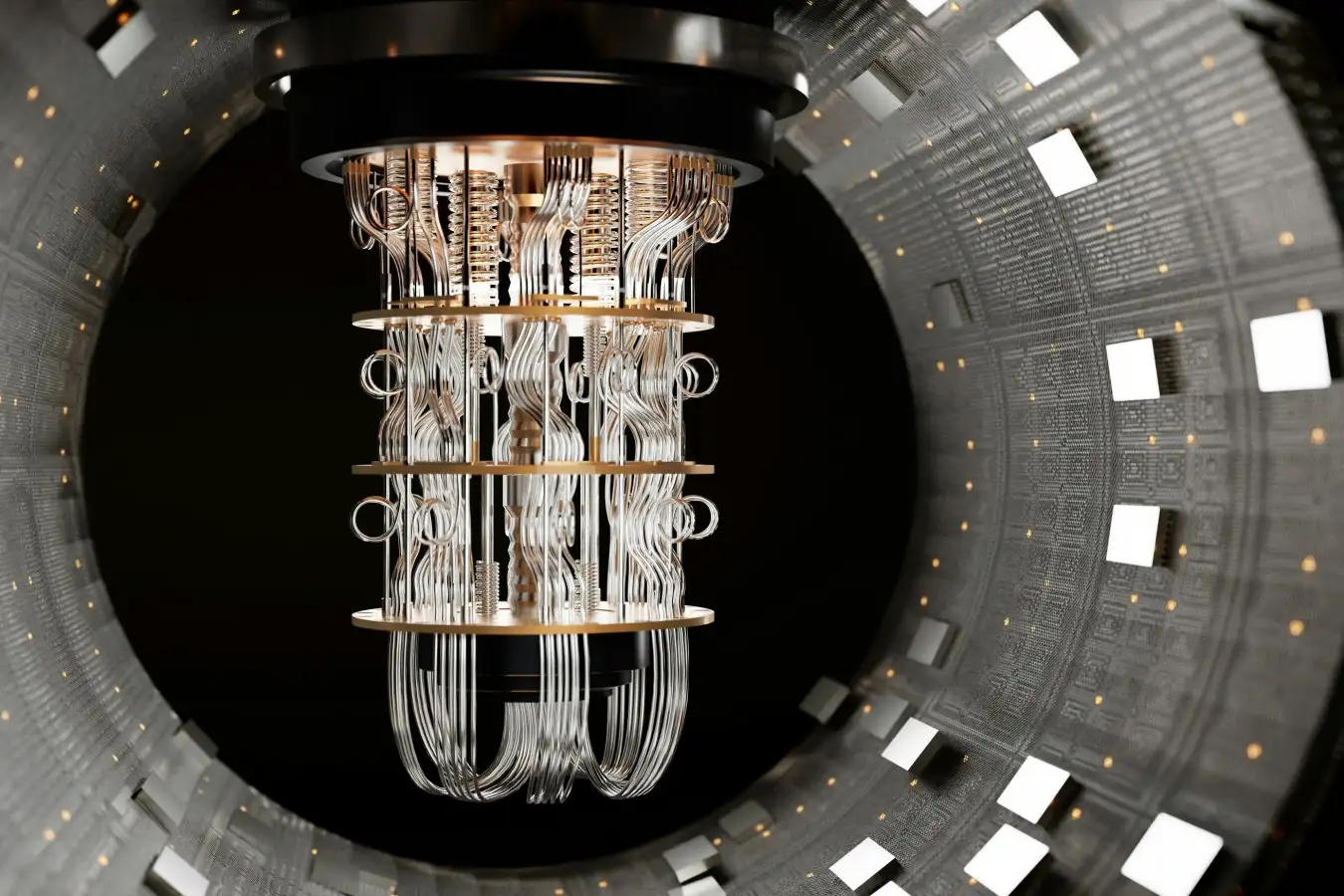
Building stable, error-free qubits is extremely challenging. Qubits are sensitive to temperature, vibration, and electromagnetic interference, requiring sophisticated cryogenic systems.
2. Error Correction
Quantum operations are prone to errors due to decoherence and noise. Error correction techniques are essential but resource-intensive.
3. Limited Software and Algorithms
Quantum computing requires specialized algorithms, which are still in development. Classical-quantum hybrid solutions are necessary for most current applications.
4. Accessibility and Cost
Quantum computers remain expensive, limiting access to large organizations and research institutions.
The Road Ahead
By 2026, quantum computing is moving from theory to practical applications. Key trends include:
- Cloud-based quantum computing services from IBM, Google, and Microsoft
- Expansion of quantum programming languages like Qiskit and Cirq
- Increased investment in quantum startups and research
- Emergence of quantum-safe cybersecurity standards
Quantum computing has the potential to transform industries, solving problems that were previously unsolvable and accelerating innovation across multiple domains.
Final Thoughts
Quantum computing represents a paradigm shift in technology. While challenges remain, advancements in qubit stability, error correction, and software development are bringing practical applications closer to reality. In 2026, industries from healthcare to finance, climate science, and AI are starting to experience the transformative power of quantum computing.
Understanding and preparing for quantum computing is essential for businesses, researchers, and technology professionals aiming to stay at the forefront of innovation.
Also Check Future of AI – Super Trends, Applications, & Challenges 2026
1 thought on “Quantum Computing – Super Transformation of Tech in 2026”