
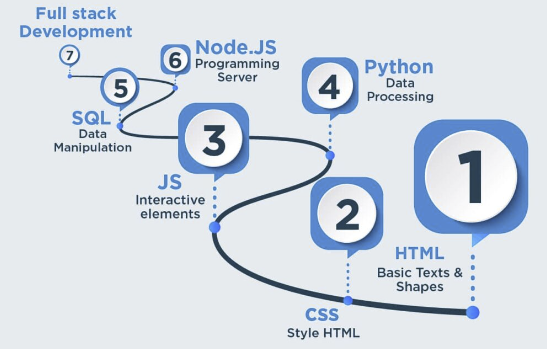
Web development remains one of the most in-demand and future-proof careers in the tech industry. In 2026, businesses, startups, and enterprises rely heavily on websites and web applications for growth, automation, and digital presence. From simple landing pages to complex SaaS platforms, skilled web developers play a crucial role in shaping the digital world.
This comprehensive Web Development Roadmap (2026) will guide you step by step from a complete beginner to a professional web developer.
Table of Contents
What Is Web Development?
Web development is the process of building, maintaining, and optimizing websites and web applications that run on the internet. It involves frontend interfaces, backend logic, databases, and deployment infrastructure.
Web development is broadly divided into:
- Frontend Development – User interface and user experience
- Backend Development – Server-side logic and databases
- Full-Stack Development – Combination of frontend and backend
Step 1: Learn Web Fundamentals (HTML, CSS, JavaScript)
Every web developer must start with the core building blocks of the web.
HTML (HyperText Markup Language)
- Structure of web pages
- Semantic HTML for accessibility and SEO
- Forms, media, and layouts
CSS (Cascading Style Sheets)
- Styling and layout
- Flexbox and Grid
- Responsive design
- Animations and transitions
JavaScript
- Variables, functions, and loops
- DOM manipulation
- Events and user interaction
- Asynchronous JavaScript (Promises, async/await)
Step 2: Version Control with Git and GitHub
Professional web development requires collaboration and version control.
Key concepts:
- Git basics (init, commit, branch, merge)
- GitHub repositories
- Pull requests and code reviews
Version control helps track changes, collaborate in teams, and manage projects efficiently.
Step 3: Choose a Frontend Path
In 2026, frontend development focuses on building fast, interactive, and accessible user interfaces.
Core Frontend Skills
- Responsive design
- Accessibility (WCAG standards)
- Web performance optimization
Popular Frontend Frameworks
- React – Component-based UI development
- Next.js – Server-side rendering and full-stack features
- Vue.js – Progressive frontend framework
Next.js is especially popular in 2026 for SEO-friendly and scalable applications.
Step 4: Learn Backend Development
Backend development powers the logic behind web applications.
Core Backend Concepts
- RESTful APIs
- Authentication and authorization
- Databases and data models
- Server-side security
Popular Backend Technologies
- Node.js with Express
- Django (Python)
- Laravel (PHP)
Backend developers manage data, business logic, and server performance.
Step 5: Databases and Data Management
Modern web applications depend on efficient data storage.
Types of Databases
- Relational Databases: MySQL, PostgreSQL
- NoSQL Databases: MongoDB, Firebase
You should learn:
- CRUD operations
- Database design
- Indexing and optimization
Step 6: Full-Stack Development
A full-stack developer understands both frontend and backend systems.
Skills include:
- Connecting frontend with APIs
- Managing authentication
- Handling databases
- Deploying complete applications
Full-stack developers are highly valued in startups and freelance markets.
Step 7: Web Security and Best Practices
Security is critical in 2026.
You must learn:
- HTTPS and SSL
- Preventing XSS and SQL Injection
- Secure authentication
- OWASP Top 10 vulnerabilities
Step 8: Deployment, Cloud, and DevOps Basics
Knowing how to deploy applications is essential.
Common Deployment Platforms
- Vercel
- Netlify
- AWS
- DigitalOcean
You should understand:
- CI/CD basics
- Environment variables
- Serverless deployment
Step 9: Build Real-World Projects
Projects are the strongest proof of your skills.
Project ideas:
- Portfolio website
- Blog platform
- Task management app
- E-commerce store
- SaaS dashboard
Host your code on GitHub and deploy live versions.
Step 10: Career Paths in Web Development (2026)
Web developers can work as:
- Frontend Developer
- Backend Developer
- Full-Stack Developer
- Freelance Web Developer
- Startup Founder
With remote work and freelancing platforms, global opportunities are more accessible than ever.
Final Thoughts
Web development in 2026 is a dynamic and rewarding career. By mastering fundamentals, modern frameworks, backend technologies, security, and deployment, you can grow from a beginner to a professional web developer. Consistent practice, real-world projects, and continuous learning are the keys to long-term success.
1 thought on “Web Development Roadmap – Powerful Guide – 2026”