
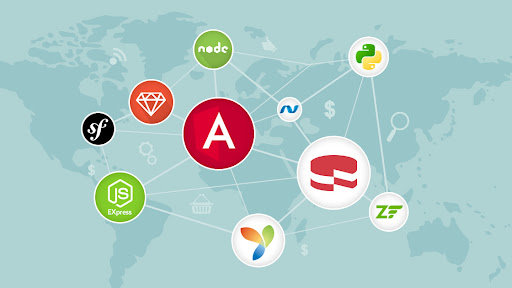
Web development frameworks and libraries play a crucial role in building fast, scalable, and maintainable web applications. By 2026, the web ecosystem has matured with powerful tools that improve developer productivity, enhance performance, and support modern requirements such as SEO, accessibility, and serverless deployment.
This article covers the top web development frameworks and libraries in 2026, explains their use cases, and helps you choose the right tool for your projects.
Table of Contents
Why Web development Frameworks and Libraries Matter
Frameworks and libraries:
- Reduce development time
- Enforce best practices and structure
- Improve performance and scalability
- Simplify maintenance of large applications
Instead of writing everything from scratch, developers rely on these tools to focus on business logic and user experience.
Frontend Frameworks and Libraries
1. React
React remains the most widely used frontend library in 2026. Developed by Meta, React is known for its component-based architecture and strong ecosystem.
Key Features
- Component-based UI development
- Virtual DOM for efficient updates
- Strong community and third-party ecosystem
- Works well with modern tooling
Best Use Cases
- Single-page applications
- Interactive dashboards
- Large-scale frontend projects
2. Next.js
Next.js has become the preferred choice for modern web applications that require SEO, performance, and scalability.
Key Features
- Server-side rendering (SSR)
- Static site generation (SSG)
- API routes for full-stack development
- Excellent performance optimization
Best Use Cases
- SEO-focused websites
- SaaS applications
- E-commerce platforms
Next.js is widely adopted by startups and enterprises alike.
3. Vue.js
Vue.js is a progressive web development framework known for its simplicity and flexibility.
Key Features
- Easy learning curve
- Reactive data binding
- Component-based architecture
- Flexible integration with existing projects
Best Use Cases
- Small to medium-sized applications
- Gradual migration projects
- Rapid prototyping
4. Angular
Angular, developed by Google, is a full-featured frontend web development framework designed for enterprise-level applications.
Key Features
- TypeScript-based
- Built-in tools for routing, forms, and HTTP
- Strong structure and conventions
- Ideal for large teams
Best Use Cases
- Enterprise applications
- Complex, long-term projects
- Applications requiring strict architecture
Backend Web Development Frameworks
5. Node.js with Express / NestJS
Node.js enables JavaScript to run on the server, making full-stack development more accessible.
Express.js
- Lightweight and flexible
- Minimal setup
- Ideal for APIs and microservices
NestJS
- Built on top of Node.js
- Uses TypeScript
- Strong architecture inspired by Angular
6. Django
Django is a high-level Python framework known for its security and rapid development capabilities.
Key Features
- Built-in authentication and admin panel
- Strong security defaults
- Scalable and maintainable
Best Use Cases
- Data-driven applications
- Content management systems
- Secure enterprise platforms
7. Laravel
Laravel remains one of the most popular PHP frameworks in 2026.
Key Features
- Elegant syntax
- Built-in tools for authentication, routing, and caching
- Strong ecosystem
Best Use Cases
- Web applications and APIs
- Rapid development projects
- CMS and admin dashboards
Full-Stack and Meta Frameworks
8. Svelte and SvelteKit
Svelte is gaining popularity for its compile-time approach, resulting in highly performant applications.
Key Features
- No virtual DOM
- Smaller bundle sizes
- Simple syntax
SvelteKit adds routing, SSR, and deployment features.
Styling and UI Libraries
9. Tailwind CSS
Tailwind CSS is a utility-first CSS framework widely used in 2026.
Benefits
- Faster UI development
- Highly customizable
- Consistent design systems
Choosing the Right Framework in 2026
Choose based on your goals:
- SEO & Performance: Next.js
- Frontend UI: React or Vue
- Enterprise Apps: Angular
- Backend APIs: Node.js, Django
- Rapid Development: Laravel
- High Performance: Svelte
There is no “best” framework for all projects. The best choice depends on project requirements, team expertise, and long-term scalability.
Industry Trends Influencing Framework Choice
In 2026, web development trends include:
- Serverless architectures
- AI-assisted development
- Headless CMS integration
- Microservices and APIs
- Performance and accessibility focus
Frameworks that support these trends are gaining widespread adoption.
Final Thoughts
Web development frameworks and libraries continue to evolve rapidly. In 2026, developers have access to powerful tools that simplify complex tasks, improve performance, and enable scalable applications. Mastering one or two core frameworks while understanding others at a high level is the most effective strategy for long-term success in web development.
Also Check Frontend vs Backend Development – Super Guide – 2026
1 thought on “Best Web Development Frameworks and Libraries in 2026”